Experts of HSE ISSEK Foresight Centre Shared Best Practices in Long-Term Forecasting and Using the AI-Platform iFORA with the Government of Dubai Representatives

On September 21 Foresight-Session "Future of Financial Management:Trends, Weak Signals and Wild Cards", organised by the Department of Finance for the Government of Dubai was held in Dubai. Director of Foresight-Centre, Head of UNESCO Chair on Future Studies HSE University Institute for Statistical Studies and Economics of Knowledge (ISSEK) Alexander Sokolov and Project Team Manager of HSE ISSEK Centre for Strategic Analysis and Big Data Sofya Privorotskaya presented cutting-edge long-terms forecasting tools, including big data analysis for state strategy development and in particular for financial sector.
The Foresight-Session was moderated by Professor Ozcan Saritas, Director of Future Foresight at the Rochester Institute of Technology in Dubai. According to him, financial forecasting should become an integral part of the state strategy, budget planning, risk management, and performance management systems.
Technological progress, artificial intelligence, growing uncertainty, and shifting societal expectations transform governments approaches to financial resources management. Financial foresight helps anticipate emerging risks, identify new revenue sources, strengthen fiscal resilience, and make more evidence-based long-term investment decisions. When developing a state strategy, it is not enough to simply determine the need for financial resources for the next three years. It is also necessary to understand what changes may occur over the next ten years and how they might affect state revenues and the sustainability of public finances.To this end, financial foresight makes it possible to link a long-term vision with strategic decisions made today. It is not merely a matter of predicting the future, but of building the flexibility to respond effectively to potential events.


Alexander Sokolov presented the HSE’s extensive, cutting-edge experience in long-term forecasting and demonstrated how foresight can be used for strategic planning in the financial sector. He discussed monitoring of global trends and weak signals, development of possible future scenarios, and an approach when emerging changes and low-probability events are regularly tracked and considered as they arise, thereby transforming foresight into a continuous process.
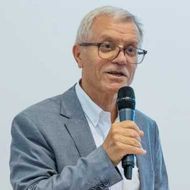
Deputy Director of HSE University Institute for Statistical Studies and Economics of Knowledge, Director of International Research and Educational Foresight Centre, Head of UNESCO Chair on Future Studies
We implement foresight as a continuous, cyclical process, rather than merely a one-off event. Based on foresight studies, we identify priorities for industrial development and various economic sectors. Our university has developed a series of technology roadmaps for business.These are approaches enable to elaborate concrete plans for goals achieving, taking into account various potential scenarios. On this basis, we help governments and companies develop tools to support strategic decision-making.
In the context of the Dubai government's interest in the future of financial management, Director of the HSE Foresight Centre cited an example of major Russian banks to highlight that large-scale technological transformation is becoming a key trend in financial industry, given that many financial operations in Russia are now carried out by IT giants. Technology, science, and innovation serve as the major drivers of the economy and all its sectors. For financial institutions, a key consideration when investing in a company is assessing the risks associated with either adopting or failure to adopt new technologies that is directly linked to the company's future development.
Rising uncertainty and the increasing complexity of systems pose new challenges for foresight studies, requiring the application of state-of-the-art analytical methods—including AI usage. In this context, the accuracy and reliability of data being analyzed are of critical importance.
Sofya Privorotskaya presented iFORA multi-agent AI platform, developed by the HSE University ISSEK) under the Priority 2030 programme.Representatives of the Dubai Government’s Department of Finance showed particular interest in iFORA’s capabilities addressing foresight studies in the financial sector, including a modular architecture and a proprietary language model iFORA.LLM. The platform’s tools can be combined to address specific management tasks, enabling faster identification of new growth opportunities and potential risks.

Project Team Manager of HSE ISSEK Centre for Strategic Analysis and Big Data
A distinctive feature of iFORA is that the system was originally designed as a specialized analytical tool for foresight, technology forecasting, and tfuture scenarios analysis. It integrates key foresight analytics methods, including trend monitoring, technology landscape scanning, weak signal detection, "wild card" analysis, technology maturity assessment, and the generation of consensus forecasts. To implement these, the system offers over 40 specialized analytical and visual formats.
During the discussion, the meeting participants addressed prospects for collaboration in the field of foresight studies and practical application of the iFORA big data analytics system for long-term forecasting and strategic planning in financial sector.